“Why don’t the good cops speak out and ban together against the bad cops?”
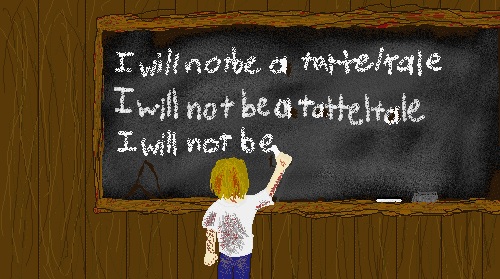
This was a question I saw posted on social media yesterday. I’m pretty sure I know the answer. It’s the same as why good teachers don’t speak out and ban together against bad teachers, why good doctors don’t speak out and ban together against bad doctors, and why good priests don’t speak out against the pedophiles among them: It’s actual fear ̶ fear of being called a “rat” by your “tribe” of colleagues, fear of being ostracized or known as a “troublemaker,” fear of someone at a higher level in your workplace hierarchy destroying your reputation and your livelihood. (How many of us are old enough to remember Frank Serpico?)
When I was teaching in a New York City public school, here are some of the things well-meaning things friends and family said to me when I told them about the very sickening behaviour of one of the so-called ‘teachers’ at the school: “He has tenure, you don’t. And the principal doesn’t want trouble. He’d have to go through hoops to get rid of this teacher, so he’ll get rid of you, instead. Do you want that? How does that help the kids if they fire you?”
I heard from my then husband, “Why do you have to be the one to report it? Just do your job. We need your salary.”
I heard from a loving friend, “Can’t you at least wait until you get tenure too? Then they can’t fire you.” (At the time I was at least two years away from tenure.) And when I did report it ̶ of course̶ it was met by amazement ̶ not that it was happening, because everyone knew ̶ but because I voiced it. And just as you’d expect, that teacher wasn’t fired, but I was on the administration’s black list from then on, until I finally left.
So there’s that.
But then, there are also those good cops, good teachers, good doctors, etc, who personalise it: “If you’re talking about a cop, good or bad, you’re talking about me.” Or my son who’s a cop, or my daughter who’s a doctor,” etc.
They think, “I hate hearing this and I don’t want to hear it.” This is the way society in general operates: “Not my country,” “Not my sports team,” “Not my senator. They didn’t do anything wrong, they couldn’t possibly have, because they belong to me.”
We stand up for those whom we think of as ours, no matter how revolting are the things that they do.
And in fact, this is the way dysfunctional families operate too. The one who calls mom or dad or uncle or sibling out on reprehensible deeds is the one who is targeted: “You’re lying.” “That never happened.” “That’s the way you remember it.” Other family members are told, “She’s always been unbalanced. She’s always been different, she’s never really been one of us.”
This is why brave deeds are called BRAVE: to stand up to that, you have to be prepared to lose everything that is valuable to you ̶ your job, your tribe, your income, your reputation. You have to be prepared to leave what it is you love̶ your school, your precinct, your medical practice, your family ̶ you have to be prepared for people to whisper about you for the rest of your life. And today, you also have to be prepared to be slammed on social media too. It’s not only your local citizenry who will know when you stand up and point a finger, it’s the whole damn world. With one click of “send” your protest against injustice can go viral and then perfect strangers will be judging you, based on their own fears, their own prejudices.
How do I know? Because it’s happened to me, over and over again. It’s happened to others I love. I’m proud to be among those who have that kind of integrity, but let me tell you ̶ sometimes it’s horrific and lonely. Doing what’s right, speaking the truth, can end up crushing your soul. Being brave is not for sissies.
Leave a Reply