 Something I was working on yesterday got me thinking about the term, “black sheep.” Webster’s defines it as, “a disfavored or disreputable member of a family or group,” and, “someone who does not fit in with the rest of the collective; often considered to be a troublemaker or an embarrassment.”
What that definition doesn’t cover is why a person gets charged with this distinction. And there’s not just one reason, is there? No, in fact, there are many.
Here’s one: (And this might be a terrible example, considering everything that’s going on in the world today, but I’ll risk it, for the purpose of the visual)
Suppose someone — let’s say John Smythe — climbs to the top of the town clock tower with a Tommy gun and, with no cause or agenda whatsoever, starts shooting at innocent passersby below. I’d imagine the rest of the Smythe family might then consider John to be “a troublemaker and an embarrassment.” Hence, the black sheep of the family, in this particular case, the Smythe family.
However, let’s turn that around. Suppose the entire Smythe clan is sitting at the family dinner table, and one of them suddenly says, “Hey. I’ve got a great idea. Let’s all get out our Tommys, climb up to the top of the town clock tower, and shoot at innocent passersby below.” Everyone sitting there agrees that this would indeed be a great idea, an exceptional idea. Everyone, that is, but John.
John is the only one who replies, “My god. Have you all gone mad? That’s a horrible idea.”
Wouldn’t John then still be the black sheep of the Smythe family? After all, he’s still the “troublemaker,” still the one in the group who “doesn’t fit in with the collective.”
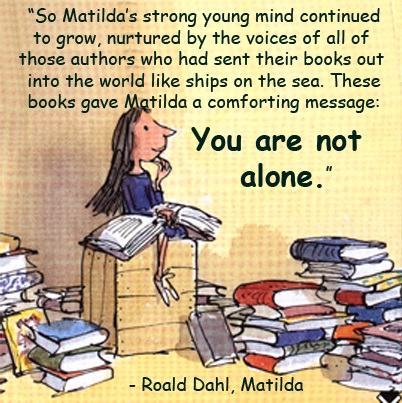
And that’s what I’m always be careful of, when I hear someone given that label. While there’s every chance that the black sheep in the family is evil incarnate, there’s an equal possibility that, like the fictitious Sirius Black, he is instead the victim of evil. Or she might, like the fictitious Matilda, be the lone one who points her finger at the family’s every day practices that are illegal, immoral, or simply dysfunctional. He might be ostracized because he is a homosexual in a family of homophobic bigots, she might be stricken from the Smythe family Bible because she’s an atheist in a family of fundamentalists.
But for the “black sheep” who is ostracized and maligned for calling out any verbal, physical and/or sexual abuse that’s taking place within the tribe, the spiritual and psychological damage is far, far worse. Not only must he forever live outside of the group into which he was born, separate from the people whom he called “family”—he must also live with the damage they inflicted upon him, the remembered hurt and bruises, the lingering shame. He must live with the stigma placed upon him by those he first loved before any other human beings. They’ve branded him, they’ve aligned themselves against the truth he dared to speak out loud. They’ve gathered an army against him to fight that truth, by slandering him and by denying past events, past harms, in order to maintain a fraudulent reality–that of a family group that is loving and good.
Except for this: Truly loving and good families don’t have “black sheep.” Truly loving families don’t excommunicate and blackball a daughter, a son, a brother, a sister, who is different from the rest. Truly loving families accept and embrace.
So when you hear someone say, “He’s the black sheep of the family,” what that person might actually be saying is, He’s the one who escaped. He’s the one I wish I could be, but didn’t have the courage to be. He’s the one who scares us all. And if we don’t publicly destroy his character, spit on his choices, and question his sanity, then, you, like he, will know what we all really are.”
Leave a Reply